My son left his 2 kids at my door. 13 years later, he returned with a lawyer and a court order calling me a criminal. What I pulled from under the floorboards silenced the entire courtroom. Shocking of a grandfather’s revenge!
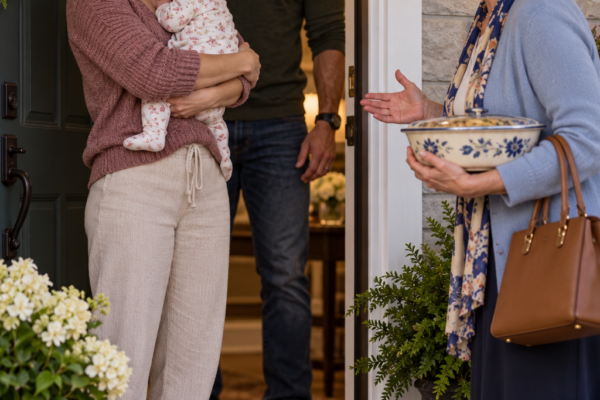
My son left his two kids on my porch on a Wednesday night in February and drove away without saying goodbye. I raised them. I fed them. I taught them how to shake a man’s hand and look him in the eye.
13 years later, he came back with a woman wearing a fur coat and a lawyer who smelled like money, waving a court order that said I was a felon.
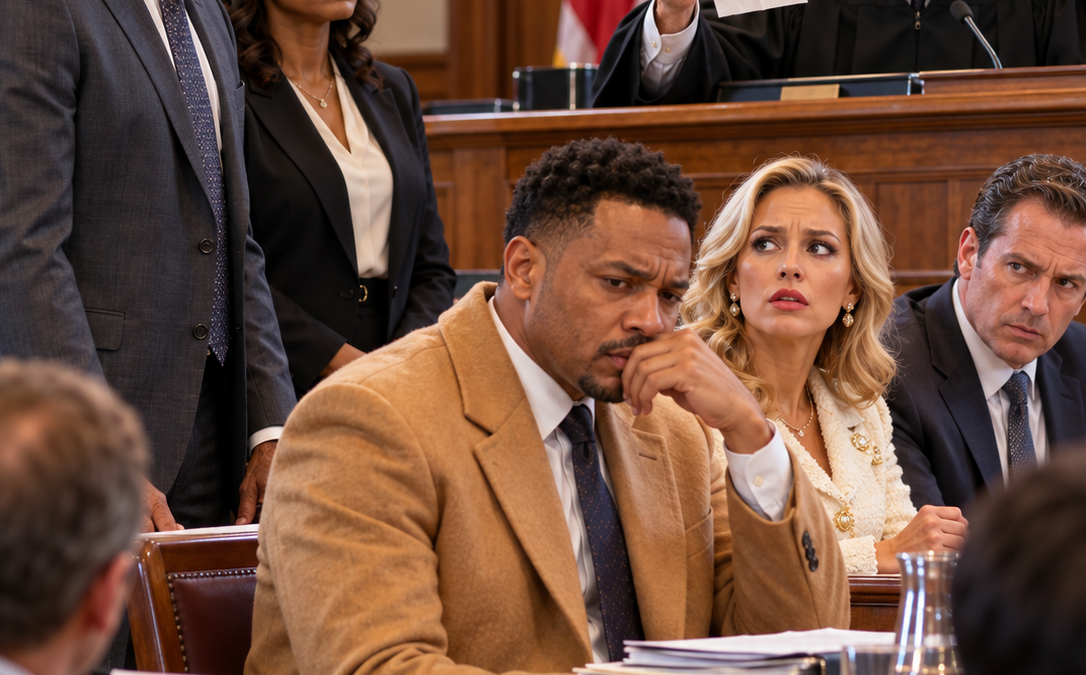
When I slid the folded paper across the judge’s bench—the one I had kept sealed inside a Bible for over a decade—the courtroom went so quiet you could hear the fluorescent lights buzzing.
The judge looked up at my son and asked, “Mr. Terrell Odum, is this your handwriting?”
I said, “Your honor, he can answer that, but I already know what the paper says. I watched him write it.”
If you have ever been punished for doing the right thing, stay with me. This one is going to hurt before it heals.
It was a Thursday morning in late October, the kind of Detroit morning where the sky is the color of old ash and the cold settles into your bones before you even open the door.
I was in the kitchen at 6:15 a.m., standing over the stove in my slippers and my late wife Ruth Anne’s old apron, the one with the faded sunflowers on it.
I had been up since 5. Old habits from 41 years on the assembly line at the Ford plant in Wayne don’t just vanish because you retire. Your body keeps punching in whether you want it to or not.
Jaylen was in the living room doing push-ups on the carpet. I could hear him counting under his breath.
At 18, the boy was built like a young lion. 6’2, 200 lb of hard work and discipline. He had a full scholarship offer sitting in a folder on the kitchen counter from the University of Michigan, waiting for his signature. Track and field, 400 m.
That boy ran like he was being chased by something beautiful.
Ammani was at the dining table with her textbooks open, her reading glasses pushed up on her nose, a mug of chamomile tea cooling beside her laptop.
She was 15 then, but she had the focus of a woman twice her age. Her teachers called her the old soul in the young body. I called her the one who was going to change the world, but I kept that between me and Ruth Anne’s photograph on the mantle.
I was scrambling eggs and listening to the morning news on the little radio above the sink when the knock came.
It wasn’t police.
Not yet.
It was a knock I recognized instantly. Soft, tentative, apologetic.
The knock of a person who knows they have no right to be there but shows up anyway.
I wiped my hands on the apron. I walked to the door. I opened it.
And there was my son.
Terrell was 41 years old, but he didn’t look it in a good way. He looked preserved somehow, like money had put him in a jar and kept the age out.
He had on a long camelh hair coat and clean boots and a haircut that cost more than my electric bill.
Beside him stood a woman I had never seen in my life. She was tall, elegant, the kind of beautiful that comes from personal trainers and dermatologists. She was holding a leather handbag with gold hardware.
Behind them both was a man in a dark suit carrying a briefcase.
I hadn’t spoken to my son in 4 years.
The last time we talked, I told him Imani needed braces, and he said he was between things right now, but he’d send something.
He never sent anything.
I looked at Terrell.
He looked at me, then passed me into the house, searching for them.
“Dad,” he said.
His voice was steady. Practiced.
“Ter,” I said.
“We need to talk.”
“Seems like it,” I said. “Come in.”
I should have known from the way the woman in the fur coat looked at my house. The way her eyes moved across the walls, the furniture, the family photographs, that she wasn’t there for a reunion.
She was appraising the damage.
She was calculating the cost of what she was about to do.
Jallen heard the voices and came in from the living room. He stopped in the doorway when he saw his father.
He hadn’t seen Terrell since he was 11 years old.
He stood very still, the way young men stand when they are trying to decide whether they feel something or whether they are going to choose not to.
“Jay,” Terrell said, smiling with everything except his eyes.
Jallen didn’t say a word.
He looked at me.
I gave him the smallest nod.
He walked to the couch and sat down with his arms crossed over his chest and his jaw set hard.
Immani came out of the dining room and stopped cold when she saw the strangers. She looked at Terrell, then at me, then at Terrell again.
She was a smart girl. She read the room the way she read books, fast and completely.
“Who is that?” she whispered to me.
“That’s your father,” I said.
She didn’t move toward him.
The woman in the fur coat cleared her throat.
“I’m Porsche,” she said.
Her voice was practiced, too. The voice of someone who had been in many rooms where she needed to control the atmosphere.
“I’m Terl’s wife. We’ve been married 3 years. I’ve heard so much about the children.”
She looked at Jallen and Ammani. The way you look at furniture you’re considering buying.
“They’re beautiful.”
The man in the suit stepped forward.
“Mr. Odum, my name is Damon Hail. I’m a family law attorney representing Terrell and Porsche. We’re here today because my clients would like to formalize a custody arrangement for Jallen and Imani and ideally do so without involving the courts.”
I looked at the lawyer.
I looked at Terrell.
I looked at Porsche, who was still standing near the door like she didn’t want to touch anything.
“13 years,” I said.
My voice was quiet.
“No birthday cards, no phone calls on Christmas, no child support, and now you want to formalize something.”
“Dad—” Terrell started.
“Don’t,” I said. “Not in front of them.”
The lawyer opened his briefcase.
He pulled out a thick packet of papers and set it on my coffee table.
“These are the terms of the proposed arrangement,” Damon said. “Essentially, Mr. Odum, you would be recognized as having provided care during an informal guardianship period. Terrell and Porsche would assume full [snorts] legal custody going forward. The children would move into their home in Bloomfield Hills. Schools, medical, all expenses would be covered. You would have visitation rights on major holidays.”
He paused.
“Subject to approval, of course.”
Bloomfield Hills, one of the richest zip codes in Michigan.
Jallen stood up so fast the couch scraped the floor.
“I’m not going anywhere,” Jallen said.
His voice was like a door slamming.
“I don’t know this man. I don’t know that woman. This is my home. My grandfather is my father. You don’t get to walk in here after 13 years and talk about visitation.”
Porsha looked at Jallen with something between admiration and irritation.
“We understand this is a shock,” she said. “But you’re still a minor, sweetheart. Legally, your grandfather has no standing. He was never appointed guardian. He has no court order. Terrell is your biological father. That means he has rights.”
“Rights?” Jalen repeated.
The word tasting like something rotten.
“He has rights.”
I put my hand on Jallen’s arm.
“Sit down, son,” I said.
He sat.
But his fists were clenched on his knees.
I looked at Damon, the lawyer.
“You said informal guardianship period,” I said. “What happens if I don’t sign those papers?”
Damon straightened his tie.
“Then we file with the family court and a judge makes the determination. Given that you have no legal documentation of guardianship, Mr. Odum, and given that Mr. Odum Terrell is the biological parent with a stable home, significant financial resources, and no criminal record…”
He let the pause sit like a held breath.
“The outcome would most likely favor my clients.”
They left 30 minutes later without anything signed, but the damage had already begun.
Two days after that morning visit, the police came.
It was not a polite knock.
It was the kind of enforcement that announces itself like weather. Fast and impersonal and devastating.
They came at 7:00 a.m. on a Saturday while Ammani was still in her pajamas. And Jallen was getting ready for an early practice at the track.
Three officers, a social worker with a clipboard, and Damon Hail standing at the curb in his dark suit, watching from a safe distance like a man who had choreographed this and didn’t need to be close to the stage for it to work.
The charge was custodial interference.
Terrell had filed a police report 2 days earlier, the same evening they left my house, claiming I was refusing to surrender the children to their rightful parent.
They handcuffed me on my own front porch.
I had 41 years of union work behind me. I had a pension. I had a mortgage I’d paid faithfully for 27 years. I had a church family and neighbors who knew my name.
And I stood there in handcuffs on a Saturday morning while the street watched, while Ammani screamed from the doorway, while Jallen pushed toward the officers and had to be held back by two of them.
“Grandpa, don’t go,” Ammani cried. “Don’t let them take him. Don’t.”
“Baby girl,” I said.
My voice didn’t break.
I would not let it break in front of them.
“Call Quincy. You have his number on the refrigerator. Call him right now. Don’t talk to anyone else. Don’t sign anything.”
They put me in the back of the squad car.
I watched through the window as the social worker led Ammani and Jallen toward a second vehicle.
Jallen looked back at me over his shoulder.
He was 18 years old, and he had the eyes of a man watching his world end for the second time.
I closed my eyes and thought about the last time I watched someone I love disappear into a car they couldn’t control.
The night Terrell drove away.
13 years earlier, February.
The kind of cold that turns your breath into smoke.
I was asleep in the recliner when the knocking woke me.
Terrell was on the porch.
He smelled like something chemical, something that didn’t belong in the cold night air. He was shaking, but not from the temperature.
In the crook of each arm, he held a child.
Jallen was five, already too big to be carried, his legs hanging down.
Immani was two, wrapped in a fleece blanket that was coming undone at one corner.
They were both asleep. Heavy and boneless the way children get when they’ve been exhausted past the point of waking.
“I need you to take them,” Terrell said. “Just for a few days. I’ve got something to handle.”
I’d heard that before.
Terrell had had things to handle since he was 19. The things were always the same kind of thing.
“Come inside,” I said. “All of you.”
“I can’t,” he said. “There’s someone waiting for me.”
I looked past him.
A car at the curb, engine running, headlights off.
“Terl,” I said, taking the children. “If you get in that car, you better come back sober.”
He kissed each of them on the top of the head.
He looked at me.
For a moment, something crossed his face. Grief or shame, I couldn’t always tell the difference with him.
Then he turned and walked down the steps and got in the car, and it drove away.
A few days became a few weeks.
A few weeks became a few months.
Then Ruthanne got sick and the months became years.
And the years piled up like snow that nobody ever shoveled.
And one day I looked up and those two babies who smelled like winter and uncertainty were a grown boy and a teenage girl.
And they were mine in every way that mattered.
I sat in the county jail cell thinking about all of it.
I thought about Ruth Anne dying during Ammani’s second grade year and how I told both kids she went to be with the Angels and how Ammani had asked me if I would go to the Angels too and how I told her, “Not for a long time, baby. Not for a long, long time.”
I thought about that promise.
I thought about how I intended to keep it.
A man in a cheap suit with a tired face came to see me in the interrogation room.
He introduced himself as my court-appointed public defender.
He opened a Manila folder and set it on the table between us and looked at me over his reading glasses.
The way doctors look at X-rays they don’t like.
“You have no guardianship papers,” he said.
It wasn’t a question.
“No,” I said.
“No custody order from the family court.”
“No.”
“And Terrell Odum is the biological father, living, present, and with sufficient means to demonstrate a stable home environment.”
“He abandoned them,” I said. “He left them on my porch in February.”
The public defender wrote something on his legal pad.
“Mr. Odum,” he said carefully. “Abandonment has a legal definition and it requires documentation. Without a report filed at the time, without court records, what you have is a grandfather who voluntarily provided care for extended family members. Noble. Absolutely noble. But legally, you’re a stranger.”
He closed the folder.
“They’re offering a plea. No jail time if you agree to transfer custody voluntarily.”
“And my grandchildren?”
“They go to their father.”
He left me with that.
I sat in the silence of the cell for a long time.
I thought about what was sitting back at my house under the floorboards in Ruth Anne’s old sewing room.
I had put it there the week after Terrell left the second time. The time he showed up 6 months later begging for money, and I told him not to come back until he was clean.
I had put it there because I knew Ruth Anne was sick and I knew I might not always be there to fight.
And I wanted proof, not for the courts. I hadn’t thought about courts.
I kept it because on the railroad and in the factory, you learn that paperwork is the only thing that survives a fire.
The next morning, I was released on bail.
Quincy had paid it.
Quincy Abrams, my oldest friend, the man who had been best man at my wedding and pbearer at Ruth Anne’s funeral.
He wasn’t a lawyer. He was a retired high school principal with a church connection and a stubbornness that could outlast granite.
He was waiting at the curb in his Buick.
We drove back to my house in silence.
Quincy knew not to talk when I was working something out in my head.
We’d been friends for 40 years.
At the house, I went straight to Ruth Anne’s sewing room.
I moved the old Singer machine aside. I lifted the edge of the area rug. I found the loose board, third one from the east wall, and I pried it up.
Inside, wrapped in a plastic shopping bag, was a tin that used to hold Danish butter cookies.
I had bought the tin because it felt durable.
It was the kind of thing that could sit in the dark for decades and still hold what you put inside.
I took it to the kitchen table.
I sat down.
I opened the lid.
Inside was a folded piece of notebook paper, a receipt from a check cashing place on 7mi road and a thin stack of documents with an attorney’s letter head that I hadn’t looked at in 8 years.
I unfolded the notebook paper.
Terrell’s handwriting, shaky, rushed, the pen pressing hard enough to leave ridges on the back of the page.
Dated February 14th, Valentine’s Day, the night he left the second time, and I told him not to come back until he’d made himself whole.
It said, in his own words, that he was voluntarily surrendering care of his children to me.
It said he was unfit.
It said he knew it.
It said he was sorry.
It was not a legal document.
It would not hold up as a custody order, but it was a confession.
It was a 13-year-old confession written by a man who was now standing in front of a judge claiming he’d been deprived of his parental rights, and stapled behind it was the check cashing receipt.
The same night, Valentine’s Day, Terrell had cashed a check at that store on 7 Mile.
The memo line on the check copy, the one I’d kept, said, “Per agreement, one-time settlement.”
The amount was $3,000.
My $3,000, my savings from Ruth Anne’s hospital fund.
I had given it to him that night to help him get into a program.
He had cashed it and disappeared.
I looked at Quincy across the table.
“We need a real lawyer,” I said.
Quincy nodded once.
“I made a call this morning,” he said.
He pushed a business card across the table.
“Adrien Moss. She handled my nephew’s wrongful termination case. She doesn’t lose, Odell.”
I looked at the card, then I looked at the cookie tin.
“Tell her to clear her schedule,” I said. “We’re going to court.”
The family court hearing was set for a Wednesday morning.
Porsche and Terrell arrived with Damon and two additional attorneys, all in matching navy suits.
They sat on the petitioner’s side, looking like a catalog spread for a law firm’s website.
Porsche wore something simple and tasteful.
She had coached herself to look sympathetic. A woman who only wanted to give her husband’s children a better life.
I wore my charcoal gray suit, the same one I’d worn to Ruth Anne’s funeral.
It was tight across the shoulders now, but my hands were steady as I buttoned the jacket.
Adrienne Moss sat beside me.
She was 50 years old, sharp-eyed with close-cropped natural hair and a stillness about her that reminded me of the best foreman I’d ever worked under, the ones who didn’t need to raise their voice because their competence already filled every room they entered.
She had reviewed everything in the cookie tin the night before.
She had also done something I hadn’t thought to do.
She had pulled the record from the probate court.
3 months before Terrell showed up at my door with a lawyer, his mother, his biological mother, a woman who had left him at a church when he was 8 and resurfaced in his life only after he married into money, had died.
She had left a will.
The will named Jalen and Ammani as beneficiaries of a life insurance policy worth $600,000.
The policy had been sitting in escrow waiting for a guardian signature.
Porche hadn’t come for the children.
She had come for the check.
Damon opened the proceedings with 40 minutes of testimony from a child psychologist hired by his firm who had never met Jallen or Ammani.
She described the damage that could be caused by prolonged separation from a biological parent.
She described symptoms of attachment disruption.
She used a lot of words that sounded like concern but functioned like accusations.
Then Damon called Earl Bighgam from Three Doors Down, a man whose leaf blower I had repaired twice free of charge.
Earl looked at the floor when he walked in.
He testified in a voice that barely reached past the witness stand that he had heard raised voices from my home on multiple occasions and had always felt something was not quite right about how strict I was with the children.
I looked at my hands while Earl talked.
I thought about all the things I could have said.
I didn’t say them.
Adrienne had told me to stay still, stay calm, and trust the tin.
When it was our turn, Adrienne stood up and walked to the center of the room.
She didn’t start with the notebook paper.
She started with Porsche.
“Mrs. Odum,” she said. “You testified that you and your husband have been attempting to locate the children for years. Is that correct?”
“Yes,” Porsche said.
“And you’ve described Mr. Odell Odum as an unstable man who interfered with your husband’s parental relationship. That’s accurate.”
Adrienne nodded slowly.
“Mrs. Odum, are you familiar with the estate of a woman named Delphine Odum?”
A small hesitation.
“That’s Terrell’s mother. She passed away 4 months ago.”
“That’s right. And she left a life insurance policy with two named beneficiaries, Jallen and Ammani Odum. $600,000 currently held in escrow pending appointment of a guardian of the estate.”
Adrienne looked at the judge.
“Your honor, I’d like to enter into evidence a certified copy of the probate filing dated 6 weeks before the custody petition was filed by the petitioners.”
Damon stood.
“Objection. Relevance.”
“Overruled,” the judge said.
He was leaning forward now.
He had the look of a man who had been refilling his coffee cup all morning and had just found something worth staying awake for.
“The relevance,” Adrienne said, setting the probate document on the bench, “is that my client’s son showed no interest in his children for 13 years. No child support, no phone calls, no birthday cards, not $1.”
She turned to face Terrell across the aisle.
“Until 6 weeks after he learned that his children were worth $600,000.”
Terl’s jaw tightened.
Porche looked at Damon.
Damon looked at his files.
“Now,” Adrienne said, walking back to our table, “I’d like to enter exhibit 2.”
She picked up the unfolded notebook paper from the cookie tin.
She held it up.
“This is a document written by Terrell Odum on February 14th, 13 years ago. [snorts] The same night he left his children for the last time.”
She walked to the judge’s bench.
“It is written in his hand, signed by him, and it states explicitly that he surrendered the care of his children voluntarily, that he knew he was unfit, that he asked my client to raise them.”
She set it down.
“Your honor, this is not a legal custody order. It cannot function as one, but it is a sworn statement of abandonment written in the petitioner’s own words, which directly contradicts everything he has testified to today.”
The room changed.
I felt it the way you feel a shift in weather. Something in the air pressure, in the temperature.
Damon was already on his feet.
“That document could be fabricated. There’s no way to verify.”
“There is, actually,” Adrienne said.
She picked up the check cashing receipt.
“Stapled to the back of that note is a dated receipt from February 14th of the same year showing that Terrell ODM cashed a $3,000 check drawn from my client’s personal savings on the same evening. The memo line reads, ‘Per agreement, one-time settlement.'”
She looked at Damon.
“This is the paper trail of a man who accepted money in exchange for walking away from his children.”
Terrell stood up.
“That money was alone,” he said.
His voice was sharp, but his hands, when I looked at them, were unsteady.
“He gave it to me. I didn’t agree to anything.”
“Sit down, Mr. Odum,” the judge said.
“Your honor, this is I said.”
“Sit down.”
Terrell sat.
Porsche put her hand on his arm.
He shook it off.
The judge held the notebook paper up to the light.
He read it twice.
He set it down.
He looked at Terrell for a long time without speaking.
“Mr. Odum,” the judge said, “is this your handwriting?”
The room was so quiet I could hear my own heartbeat.
Terrell looked at the paper.
He looked at Porsche.
He looked at Damon.
He looked at the flag in the corner of the room.
He looked at everything except me.
“Yes,” Terrell said finally.
The word came out like something he had been holding in his chest for years and couldn’t hold anymore.
“Yes, that’s my handwriting.”
The judge set the paper down on his desk and removed his reading glasses.
He rubbed the bridge of his nose.
When he put the glasses back on, he looked less like a judge and more like a grandfather.
He looked like a man who understood in his bones the weight of what was sitting in front of him.
“This court,” the judge said, his voice deliberate and measured, “finds the petitioner’s claim of wrongful custody interference to be without merit. The documented evidence of voluntary abandonment, combined with the 13-year absence of any financial or parental contribution, does not support a claim of parental deprivation.”
He looked at Damon.
“I also want to note for the record that the timing of this petition filed 6 weeks after probate was opened on the Deline Odum estate raises serious questions about the petitioner’s motivations that this court finds deeply troubling.”
Porsche looked at her hands.
“Petition for custody is denied,” the judge said. “Custodial status of the minor Ammani Odum remains with Odell Odum. Regarding Jalen Odum, who has reached the age of majority, the court has no jurisdiction over his choice of residence, and he has made that choice abundantly clear.”
The judge looked at me.
“Mr. Odell Odum, do you have anything to add?”
I thought about it.
“No, sir,” I said. “I have everything I need.”
The drive home was quiet in the way that follows a storm.
The kind of quiet that isn’t empty, just still.
Jaylen sat in the passenger seat of my old Silverado with his arms crossed and his window cracked, letting the Detroit air move through the cab.
Immani was in the back leaning against the door, watching the city roll past.
We had been driving for about 10 minutes when Imani said, “Grandpa.”
“Yeah, baby.”
“Why did he come back?” she asked. “After all this time, why did he actually come back?”
I kept my eyes on the road.
A yellow light ahead of me turned red and I eased to a stop.
“For the same reason most people show up late,” I said. “Because they finally smelled something valuable.”
“He doesn’t love us,” Ammani said.
It wasn’t a question.
It wasn’t even said with bitterness.
It was just a fact she was finally allowing herself to hold.
The way you hold something that’s been too hot to touch for years and has finally cooled down enough.
“No,” I said. “I don’t think he does. Not the way he should.”
“But you do,” Jaylen said.
He was looking out the windshield.
“Always have,” I said.
The light turned green.
I pressed the gas.
“I have something to tell you both,” I said. “Something I should have told you a long time ago.”
They were quiet.
“8 years ago, when your grandmother passed and I had to think hard about what would happen to you both if something happened to me, I hired a lawyer, an old friend from the union who’d gone to law school late in life. We went to family court. We published the notices. We proved abandonment.”
I paused.
I kept my voice even.
“I adopted you both of you legally about 8 years ago.”
The silence that followed had a sound to it.
I held breath from two people at once.
“You’re not my grandchildren on paper anymore,” I said. “You’re my children. Have been for 8 years. I didn’t tell you because I didn’t want to take anything away from you, including the hope that your father might one day be what you deserved. But I wasn’t going to let the world take you from me on a technicality.”
Jallen made a sound in his throat.
He turned his face toward the window.
I could see his reflection in the glass, eyes wet, jaw still hard.
That particular combination that is the face of a young man learning that love sometimes shows up quietly and without announcement and has been there for years before you thought to look.
Immani reached forward from the back seat and put her hand on my shoulder.
She didn’t say anything.
She just kept it there, warm and steady, the whole rest of the drive.
We pulled into the driveway.
I turned off the engine.
The three of us sat there for a moment in the quiet of the cab.
Nobody moving, nobody in a hurry to break what was between us.
“I have one more thing,” I said.
I reached into the inside pocket of my jacket and pulled out a folded piece of paper.
“The lawyer held on to these. Thought you ought to have them someday.”
I handed the paper back to Ammani.
She unfolded it carefully.
It was the decree of adoption.
Both their names, my name, the court seal, and at the bottom the name of the judge who had signed it eight years ago in a quiet room with no cameras and no drama, just an old man and a piece of paper and the weight of a promise he intended to keep until he drew his last breath.
Ammani read it twice.
Then she folded it back up and held it against her chest like it was a letter she’d been waiting for her whole life.
In a way, it was.
It has been 3 months since the hearing.
The $600,000 in Terrell’s mother’s estate is in a protected trust now, managed by a court-appointed fiduciary with Adrienne Moss watching every decimal point.
Jallen signed his scholarship papers last week, University of Michigan track and field.
He leaves in August.
Immani is taking an accelerated math course at the community college on Saturday mornings, and she comes home excited in a way I don’t fully understand, but love completely.
Terrell called once.
It was a short call.
He said he wasn’t sure what he wanted to say.
I told him I wasn’t sure I was ready to hear it yet.
He said, “Okay, we left it there. Maybe one day there will be more. Maybe there won’t. Either way, the door is not locked. I was raised to leave a light on for people. Even the ones who make it hard.”
Porsche filed for divorce 2 weeks after the hearing.
I heard that from Quincy, who heard it from someone at the church.
I didn’t feel anything in particular about it.
A woman who married into a scheme is not someone I can spend energy on.
Earl Bighgam brought over a bottle of motor oil last Tuesday and set it on my porch without knocking.
No card, no explanation.
I suppose that was his version of an apology.
I set the oil in the garage and I left it there.
I’m not going to carry grudges at 64.
My back isn’t what it used to be.
The thing about raising somebody else’s children, the thing nobody tells you and you can’t understand until you’re in it, is that they stop being someone else’s somewhere along the way.
It happens slowly, like the change of seasons, until one day you look up and there’s snow on the ground and you can’t remember what summer felt like, except that it felt like something that belonged to somebody else entirely.
Jaylen still does push-ups on the living room carpet in the morning.
Immani still drinks chamomile tea from the same mug.
I still make eggs on the old stove in Ruth Anne’s apron, and the radio still plays.
And the house still smells like everything I built from nothing over 40 years.
Some people would tell you I sacrificed, that I gave something up.
I never felt that way.
I felt like I was given two unfinished things and trusted to finish them.
And you don’t walk away from something that trusts you.
You stay.
You show up.
Every single morning you show up.
If you came here from Facebook because of this story, go back to the Facebook post, tap Like, and leave exactly “Heartfelt” in the comments. That small gesture means more than it may seem. It supports the storyteller directly and gives them real motivation to keep writing and sharing more stories like this with you.